
A flaky, itchy scalp is one of those problems that seems minor until it isn't — until you're avoiding dark clothes, dreading windy days, or scratching through a meeting. Dandruff is extremely common, and in most cases it can be managed well with the right routine. But when home remedies stop working, it may be time to look at what's actually happening beneath the surface, and whether a targeted dandruff scalp treatment can help.
What Causes Dandruff and a Flaky Scalp?
Dandruff can have several underlying causes, and they don't all respond to the same fix. Some of the more common contributors include:
- Seborrheic dermatitis — a common skin condition that causes oily, flaky patches, often on the scalp.
- An overgrowth of Malassezia, a yeast that naturally lives on the skin but can multiply and irritate the scalp in some people.
- Dry skin, which can flake in fine, less oily particles, especially in cooler or drier weather.
- Product build-up or sensitivity to certain shampoos, gels, or styling products.
- Infrequent washing, or in some cases, over-washing that strips the scalp's natural balance.
It's worth noting that a flaky scalp can sometimes point to other scalp or skin conditions, so if flaking is severe, painful, or accompanied by hair loss, it may help to have it looked at rather than guessing.
What You Can Try at Home First
For mild, occasional dandruff, home care is often a reasonable first step:
- An anti-dandruff shampoo containing ingredients such as zinc pyrithione, ketoconazole, or salicylic acid, used consistently rather than occasionally.
- Gentle, regular washing to reduce oil and product build-up without over-stripping the scalp.
- Avoiding very hot water on the scalp, which can worsen dryness and irritation.
- Reducing harsh styling products or switching to milder, fragrance-free options if the scalp feels sensitive.
These steps can help many people, but they may not be enough on their own when the underlying cause is more stubborn — which is where a professional scalp assessment can make the difference between guessing and actually addressing the cause.
Professional Scalp Treatments That Can Help
When dandruff persists despite consistent home care, a clinical scalp treatment may be worth considering. At Lumea Aesthetics, scalp treatments are approached as part of an assessment-led process rather than a one-size-fits-all fix — because what works for oily, yeast-related flaking is not the same as what helps a dry, sensitised scalp.
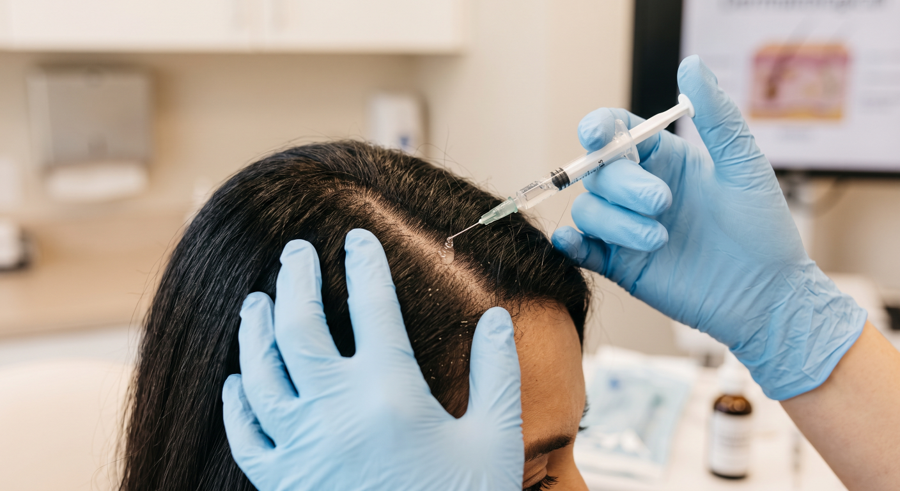
Depending on what's driving the flaking, a specialist may recommend options such as medicated scalp treatments, targeted scalp serums, or in some cases treatments like PRP or scalp therapies that may help support overall scalp health alongside dandruff management. Results and suitability vary from person to person, so any treatment plan should follow a proper in-person consultation rather than a generic recommendation.
You can see the full range of hair and skin treatments offered at Lumea on the treatments page.
Persistent dandruff that home care hasn't settled?
Book a scalp consultation at Lumea Aesthetics →What to Expect During a Clinical Scalp Assessment
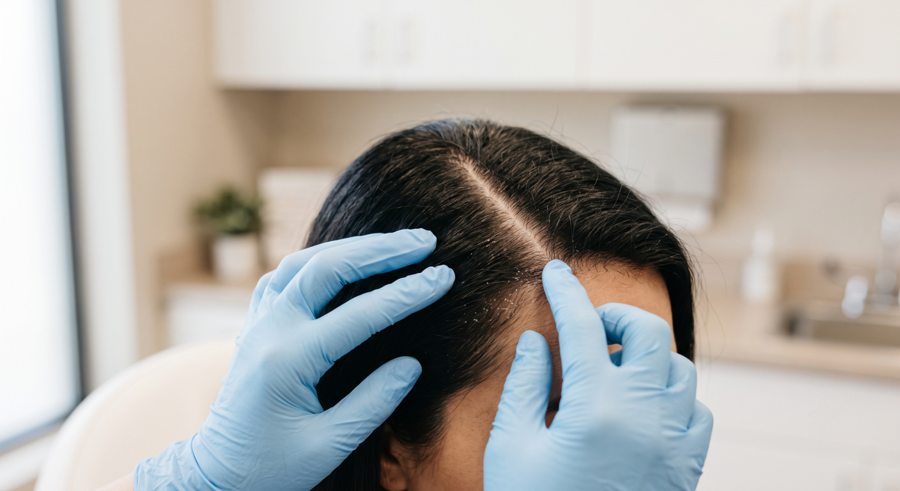
A typical scalp consultation usually starts with a close look at the scalp and hair, sometimes using magnification, to understand the pattern and likely cause of the flaking. From there, a specialist can walk you through realistic options — what may help, how long it typically takes to see a difference, and what maintenance looks like afterward. Nothing here is a guarantee of a specific outcome; scalp conditions respond differently from person to person, and a consultation is the only way to get a plan suited to your scalp specifically.
Kerala's Climate and Scalp Health
Humidity and heat, especially through Kerala's monsoon months, can make oily and yeast-related dandruff harder to manage, since warm, damp conditions can encourage the very yeast overgrowth linked to seborrheic dandruff. If you've noticed your scalp getting worse with the weather, our guide to scalp treatment in Kerala's humidity looks at this in more detail.
Maintaining a Healthy Scalp After Treatment
Whether you've had a clinical treatment or you're managing dandruff at home, consistency matters more than intensity. A few habits that can help maintain results over time:
- Sticking to the washing routine and products recommended for your scalp type.
- Avoiding switching products frequently, which can make it hard to tell what's working.
- Keeping up with any follow-up visits a specialist recommends.
- Being patient — scalp conditions can take several weeks of consistent care to visibly improve.

Frequently Asked Questions
When to Consult a Qualified Practitioner
This guide is intended as general information, not a diagnosis or a substitute for an in-person consultation. If your scalp condition is persistent, painful, or affecting your hair, it's best to consult a qualified practitioner who can examine your scalp directly and recommend a plan suited to you. Self-treating indefinitely without improvement can sometimes delay addressing an underlying cause, so it's worth getting a second opinion if home care isn't moving the needle after a few consistent weeks.
To learn more about the clinic and its approach to hair and skin care, visit our About page, or explore why patients choose Lumea on our why-choose-us page. You can also book a scalp consultation directly through our treatments page.
Ready for a proper look at your scalp?
Get in touch with Lumea Aesthetics →